
 NL
NL DE
DE FR
FR PL
PL DA
DA SV
SV AR
AR IT
IT TR
TR ES
ES PT
PT 01
011. Structure the technical catalogue
How this step works
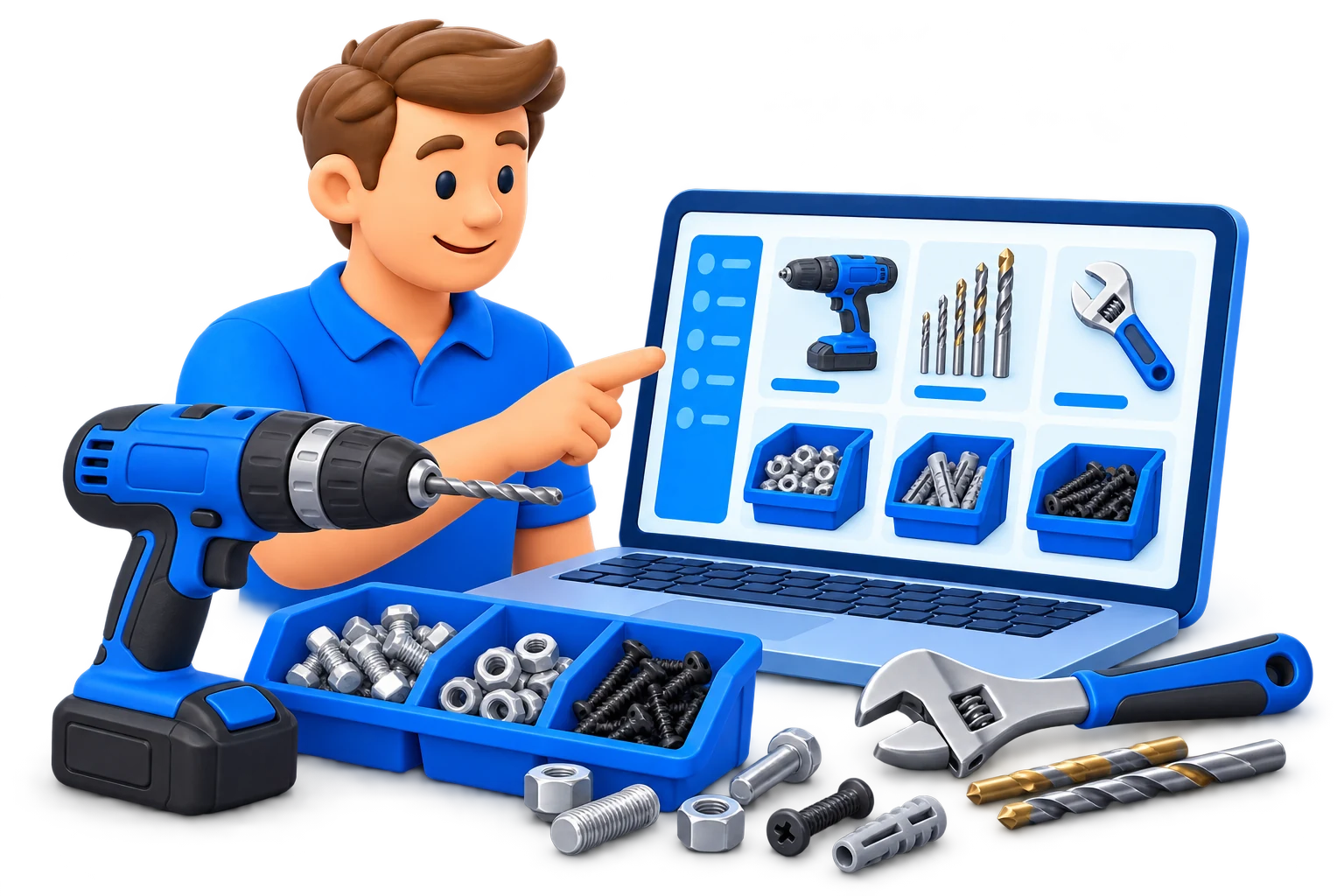
Combine supplier references with dimensions, material, tool model and packaging units. Make the technical characteristics searchable in your product structure.
 Book a personal demo
An installation company orders drill bits, fasteners and two power tools at its agreed business prices.
 01
01Combine supplier references with dimensions, material, tool model and packaging units. Make the technical characteristics searchable in your product structure.
 02
02Confirm the tool model, fastener size and units needed. Review specifications rather than assuming that products with similar names are interchangeable.
03Apply the customer's agreed prices and enter quantities with the correct selling units. Keep technical notes and delivery agreements with the enquiry.
 04
04Check available tools and components across locations. Order shortages from the relevant suppliers and retain their references with the purchasing information.
 05
05Receive the ordered goods, assign locations and collect the customer order. Check references and packaging quantities during picking to avoid the wrong size or unit.
 06
06Pack the order and link the delivery and invoice to the customer. Use the product and order history when the customer requests a repeat order or return.
Confirm the replacement item and price with the customer before processing.
Check selling and purchasing units before confirming quantities.
Record the article and condition and follow the agreed return procedure.
AI supports your team's tasks within each module. Your employees review the output and remain responsible for specifications, prices and customer agreements.
Show us how you work today. We discuss your product data, customers and logistics and identify the Corenio configuration that fits your processes.
Discuss your businessConfiguration and available integrations are discussed for your business.


