
 NL
NL DE
DE FR
FR PL
PL DA
DA SV
SV AR
AR IT
IT TR
TR ES
ES PT
PT 01
011. Prepare each customer environment
How this step works
Define the customer's product and order information, permissions and available channel connections. Keep customer records distinct within the shared warehouse operation.
 Book a personal demo
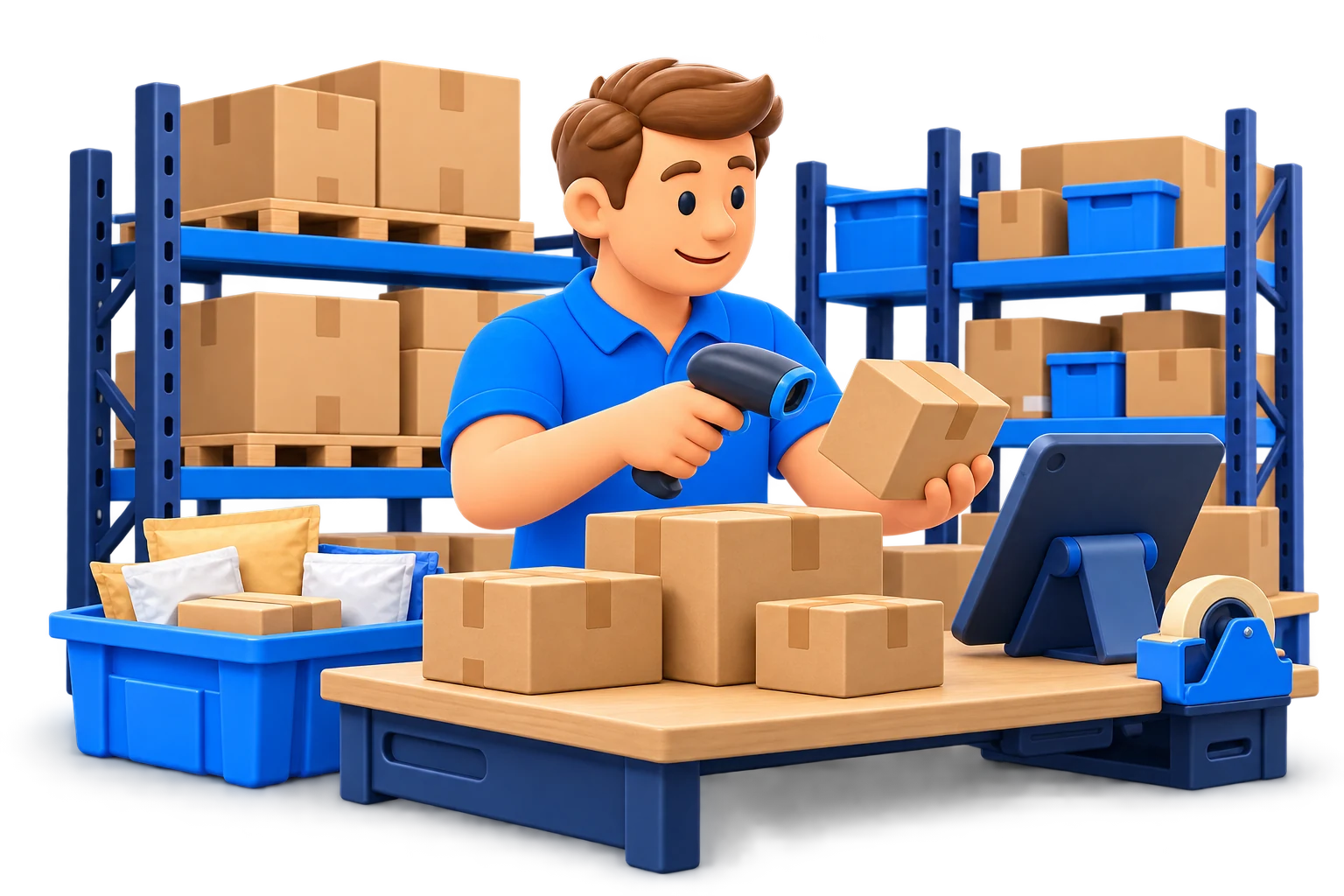
A fulfilment company receives two clients' products and processes their webshop orders from the same warehouse.
 01
01Define the customer's product and order information, permissions and available channel connections. Keep customer records distinct within the shared warehouse operation.
 02
02Check the incoming articles and quantities against the relevant customer information. Record the customer and location so the stock remains attributable to the right client.
03Receive orders through the configured connections or the agreed input method. Check the customer, articles and available stock before releasing warehouse work.
 04
04Collect items in the recorded location sequence and verify products by scanning where available. Keep orders and client stock distinguishable during the picking round.
 05
05Select suitable packaging and use the customer's configured delivery arrangements. Connect labels, tracking and packaging records to the corresponding order.
 06
06Keep order and stock information available through the customer portal. Use reports for reviewing the work and billing agreements; assess returns against the right customer's records.
Verify the customer and location before changing stock.
Review the configured connection and agreement before shipping.
Identify the customer and order before booking it into stock.
AI supports your team's tasks within each module. Your employees review the output and remain responsible for specifications, prices and customer agreements.
Show us how you work today. We discuss your product data, customers and logistics and identify the Corenio configuration that fits your processes.
Discuss your businessConfiguration and available integrations are discussed for your business.


